
Hi there, pet lovers! 🐍
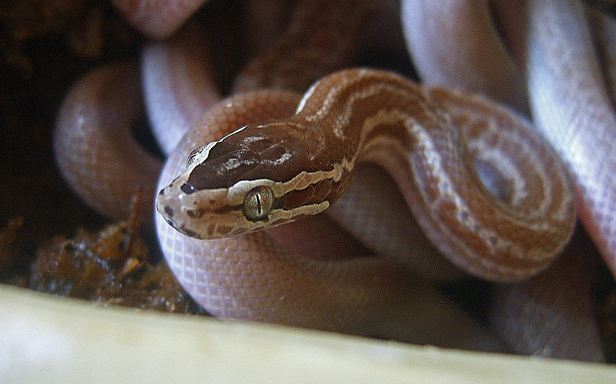
Finding the perfect pet snake can often feel like a balancing act between ease of care and a rewarding, interactive personality. While many beginners are steered toward corn snakes or ball pythons, there is a “hidden gem” in the reptile world that we believe truly takes the crown for the best all-around companion: the Cape House Snake (Boaedon capensis). These incredible African colubrids offer the “big snake experience” in a manageable, pint-sized package. Whether you are looking for a snake that actually watches you back or a hardy survivor that thrives in almost any setup, the House Snake is a species that deserves a spot in your home.
Overview
Cape House Snakes are non-venomous, nocturnal constrictors native to the diverse landscapes of South Africa. They earned their common name from their habit of frequenting human dwellings to hunt rodents, making them a “guardian” of sorts in their native range. In captivity, they are celebrated for their unrivaled hardiness and curious dispositions. Below is a snapshot of what makes these snakes so unique:
- Handling and Temperament: Highly confident and observant; they possess a “big snake” mentality but remain small and safe to handle.
- Care and Maintenance: Extremely adaptable; they thrive in everything from high-end bioactive enclosures to efficient rack systems.
- Health and Durability: Exceptionally hardy; they are semi-arid survivors capable of thriving across various environmental parameters.
- Availability: Increasingly popular among specialized breeders; widely available in a stunning array of colors and morphs.
- Cost: Generally affordable for standard varieties, with a very low lifetime maintenance cost due to their modest size.
- Overall: A top-tier choice for keepers who want an intelligent, food-driven, and easy-to-manage reptile companion.
Why Choose a Cape House Snake?
We often describe the Cape House Snake as the “intelligence of a Reticulated Python in the body of a Garter Snake.” For those who find ball pythons too sedentary or corn snakes too flighty, the House Snake offers a perfect middle ground. They are highly visually oriented, meaning they don’t just sit in a hide box all day; they will often peek out to watch the activity in the room, tracking your movements with genuine curiosity.
Furthermore, their size is ideal for modern living. Females generally reach lengths of 3 to 4 feet, while males stay significantly smaller, often topping out around 2 feet. This allows them to live comfortably in enclosures that don’t take up an entire room, yet they have enough “heft” to feel like a substantial pet when held. Their prolific nature and voracious appetite also make them a rewarding project for those interested in the rewarding world of captive breeding.
Handling and Temperament
One of the most remarkable traits we have observed in Cape House Snakes is their confidence level. Many small snake species view humans as giant predators and spend their lives in a state of defensive fear. House Snakes, however, seem to possess an analytical mind.
The “Five-Minute” Rule
When they first hatch, baby House Snakes can be “feisty little monkeys.” They may strike or even “nip” out of a defensive instinct. However, the bite of a baby is so small it rarely breaks the skin—we’ve even seen their tiny teeth get stuck in the ridges of a fingerprint! The magic happens during the first few handling sessions. We have found that it takes approximately five minutes of gentle handling for a baby to realize you aren’t going to eat them. Once that trust is established, they tend to remain calm and inquisitive for the rest of their lives.
Observational Intelligence
Unlike other colubrids that may mindlessly wander, a House Snake handles with purpose. They weave through your fingers, use their prehensile-like tails to grip your wrist, and constantly flick their tongues to “map” their environment. They provide a one-handed handling experience that is both engaging and relaxing. If handled at least once a month, they maintain a “tame” status that rivals even the most docility-prone species.
Care and Maintenance
We consider the Cape House Snake to be one of the most adaptable reptiles in the hobby. Because their native range in South Africa spans grasslands, savannas, forests, and even semi-arid deserts, they have evolved to thrive in a wide variety of conditions.
Enclosure Setup
- Size: A 20-gallon long tank or a 24″ x 18″ x 18″ enclosure is suitable for an adult, though larger is always better for enrichment.
- The “Houdini” Warning: We must emphasize that House Snakes are the ultimate escape artists. Because they are so slender—especially as hatchlings—the tolerances of the enclosure must be extremely tight. If there is a gap even slightly larger than the snake‘s head, they will find it.
- Substrate: They are not picky. We have seen success with aspen shavings, cypress mulch, or even bioactive soil. In bioactive setups, we recommend a “compost” style approach with a robust cleanup crew (isopods and springtails) to manage waste, as these snakes have a high metabolism.
Temperature and Humidity
- Gradient: We recommend a thermal gradient with a warm spot of 85-90°F and a cool side in the mid-70s. They can also thrive at a consistent ambient room temperature if a basking spot is provided.
- Humidity: They are semi-arid animals, meaning they don’t need a rainforest environment. Providing a moist hide filled with damp sphagnum moss is usually sufficient to ensure perfect sheds.
Feeding: The “Pillsbury” Effect
Feeding a Cape House Snake is arguably the easiest part of their care. We often joke that they are “food-motivated geniuses.” Unlike some snakes that require a “jump-scare” strike to trigger their feeding response, House Snakes often find a frozen/thawed rodent left in their enclosure and simply swallow it calmly. They are hardly ever “fussy” eaters.
Social Dynamics and Cohabitation
Interestingly, this is one of the few species where cohabitation can be successful, provided the keeper is experienced. We have observed that they seem to enjoy the “mental stimulation” of living in family groups. However, we must stress that if you keep them together, you must separate them for feeding to avoid accidental cannibalism or injury, as they are extremely food-driven.
Health and Durability
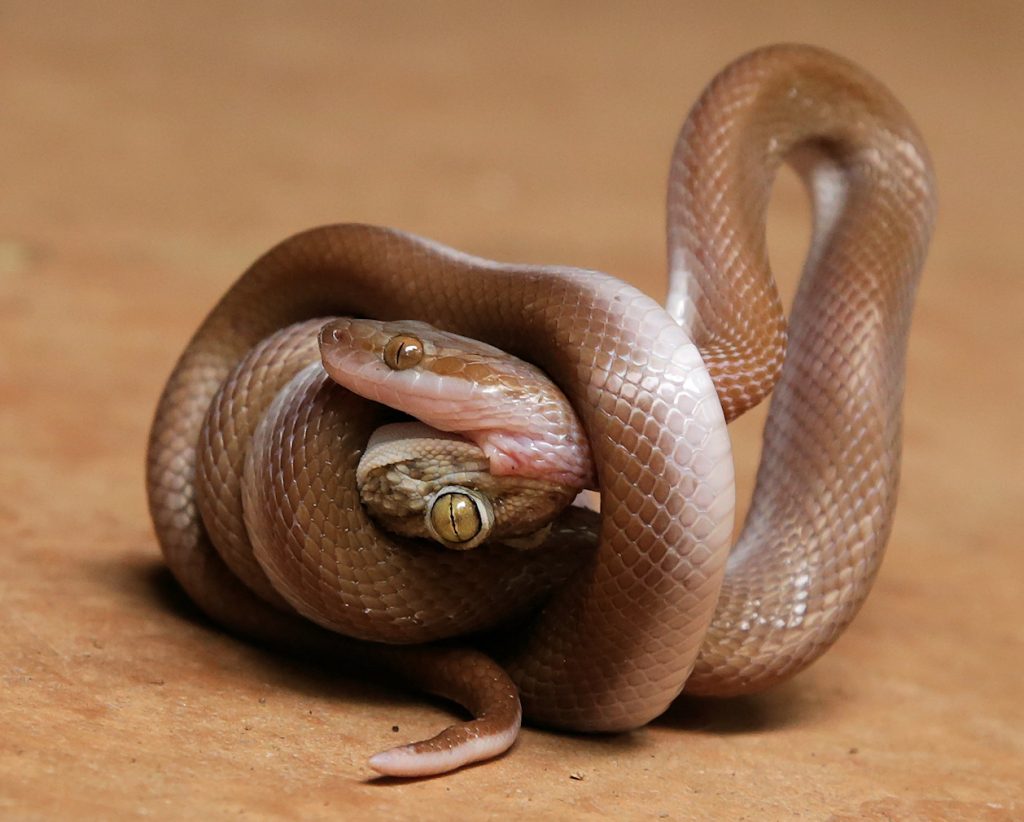
The Cape House Snake is a “tank” in the reptile world. They are not prone to the sudden “failure to thrive” issues seen in more delicate species. Their robust immune systems and adaptability make them very forgiving of minor keeper errors.
Prolific Breeding Statistics
Their health is best reflected in their incredible reproductive drive. A healthy female Cape House Snake is a powerhouse:
- 3 to 4 clutches can be produced in a single season from just one successful mating.
- A single female can produce anywhere from 30 to 100 eggs per year.
- This high output is a testament to their efficiency as a species, though it means keepers must be prepared for a “mountain of babies” if they choose to house males and females together.
Common Health Considerations
While hardy, they aren’t invincible. The most common issues we see are respiratory infections caused by stagnant, overly humid air, or obesity due to their “never-say-no” attitude toward food. By maintaining a clean environment and a strict feeding schedule (once a week for adults), most of these issues are easily avoided. With proper care, we expect these snakes to live 15 to 20 years.
Availability and Cost
In the past, Cape House Snakes were a “niche” species, but thanks to the dedicated work of breeders like Warren Klein at Bushfeld Reptiles, they are becoming a staple of the hobby.
Where to Buy
We always recommend purchasing from a reputable breeder or a reptile expo rather than a general pet store. This ensures you are getting a captive-bred animal that is already established on frozen/thawed mice. It also gives you access to the “wild” world of morphs.
The Cost of Entry
- Standard Morphs: A “Normal” or wild-type Cape House Snake is very affordable, typically ranging from $50 to $100.
- Designer Morphs: If you want something unique, the sky is the limit. There are T-positive Albinos that glow with orange and yellow hues, Metallic Slate Grays that look like polished stone, and even “High Contrast” selectively bred bloodlines. These can range from $200 to over $1,000 for rare hybrids or new genetic discoveries.
- Setup Costs: A complete, high-quality setup including an enclosure, heating, and decor will typically run between $150 and $300.
Pros and Cons
| Pros | Cons |
| Exceptional Temperament: Confidence that rivals much larger, more “intelligent” pythons. | Escape Artists: Their slender bodies can slip through incredibly small gaps. |
| Feeding Response: Almost never refuse a meal; very easy to transition to frozen/thawed. | Fast Babies: Hatchlings can be very quick and “zippy” until they settle down. |
| Adaptable Care: Can thrive in simple or complex, naturalistic setups. | High Prolificacy: Will breed constantly if males and females are cohabitated. |
| Perfect Size: Large enough to handle, small enough to house easily. | Nocturnal: Most active at night, though they will bask during the day. |
Final Thoughts
The Cape House Snake is, in our professional opinion, one of the most underrated animals in the reptile hobby today. They offer a unique “bridge” between the ease of a beginner snake and the fascinating behavior of advanced species. Watching a clutch of these “cheeky little monkeys” hatch—seeing the oranges, slates, and striped patterns emerge from the eggs—is a reminder of just how diverse and rewarding this species can be.
If you are looking for a pet that will recognize your presence, eat with gusto, and thrive for decades with minimal fuss, the Cape House Snake is a choice you will not regret. We encourage you to reach out to specialized breeders and see these “big-package” snakes in person. Their stunning metallic scales and “puppy-dog” faces are almost guaranteed to win you over.
Are you ready to welcome a “Houdini” of your own into the family? Let us know what morph caught your eye, and we’d be happy to help you design the perfect bioactive home for your new companion! 🐍


Leave a Reply