
Hi there, pet lovers! 🦎
If you’re looking for a fascinating, low-maintenance aquatic pet that’s truly unlike anything else, fire belly newts might just be your perfect match. These small but captivating amphibians are packed with personality, stunning colors, and fascinating behaviors that make them a joy to observe. Whether you’re a seasoned reptile and amphibian keeper or someone just dipping their toes into the hobby, fire belly newts are an incredibly rewarding species to keep. In this detailed review, we’ll walk you through everything you need to know — from their temperament and care requirements to costs and availability — so you can decide if these little creatures are the right fit for your home.
Overview
Fire belly newts come in two main species commonly kept as pets: the Chinese fire belly newt (Cynops pyrrhogaster) and the Japanese fire belly newt (Cynops pyrrhogaster). Both share very similar care requirements, making this guide applicable to either species. Here’s a quick summary of what makes them stand out:
- Handling and Temperament: Not ideal for frequent handling, but highly interactive and entertaining to observe.
- Care and Maintenance: Relatively low-maintenance, but require a proper semi-aquatic setup and clean water.
- Health and Durability: Hardy when kept in the right conditions, but sensitive to poor water quality and high temperatures.
- Availability: Moderately available through breeders, reptile expos, and some specialty pet stores.
- Cost: Affordable to purchase, with a moderate setup cost.
- Overall: A fantastic, underrated pet for amphibian enthusiasts of all experience levels.
Why Choose a Fire Belly Newt?
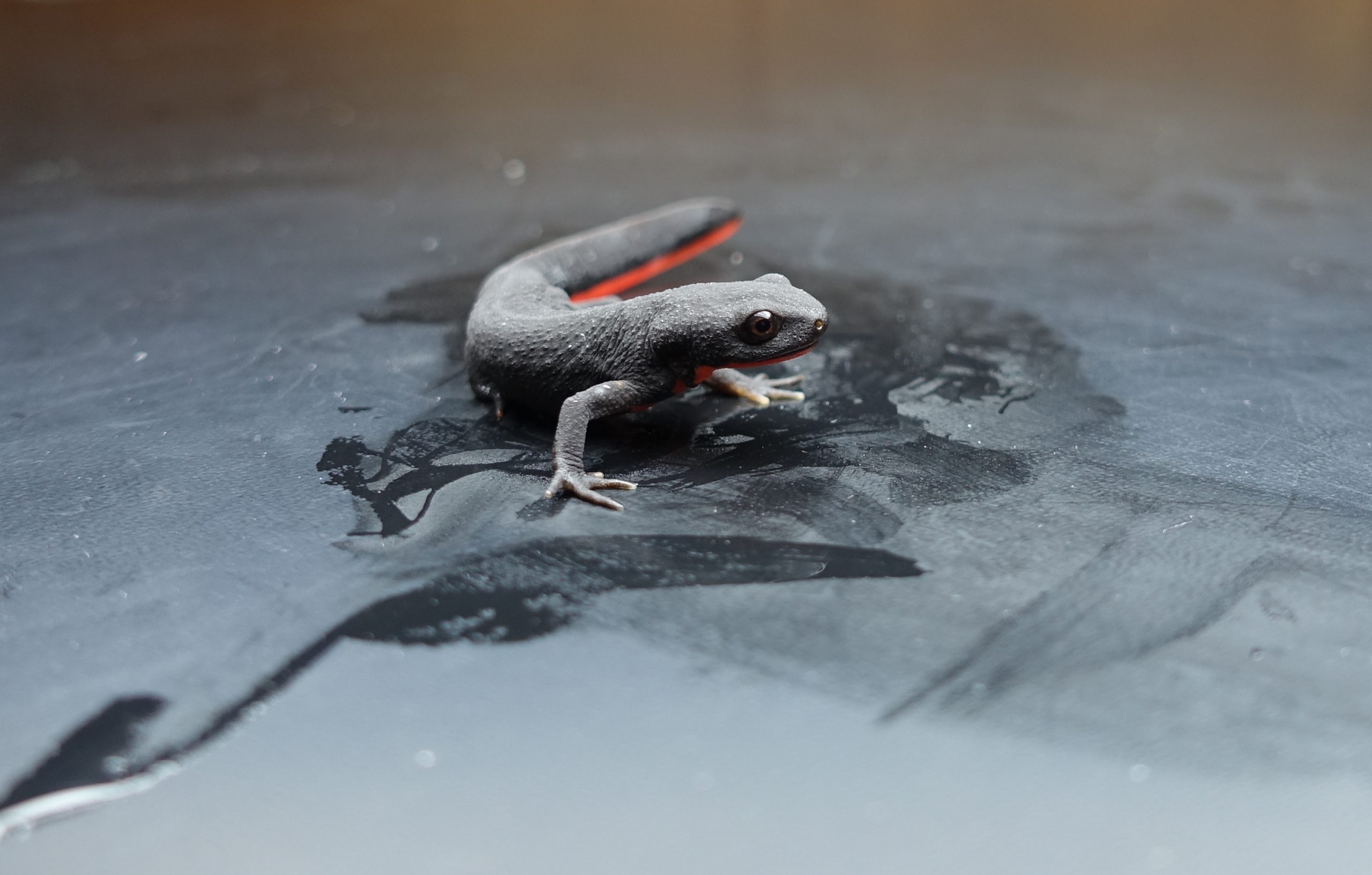
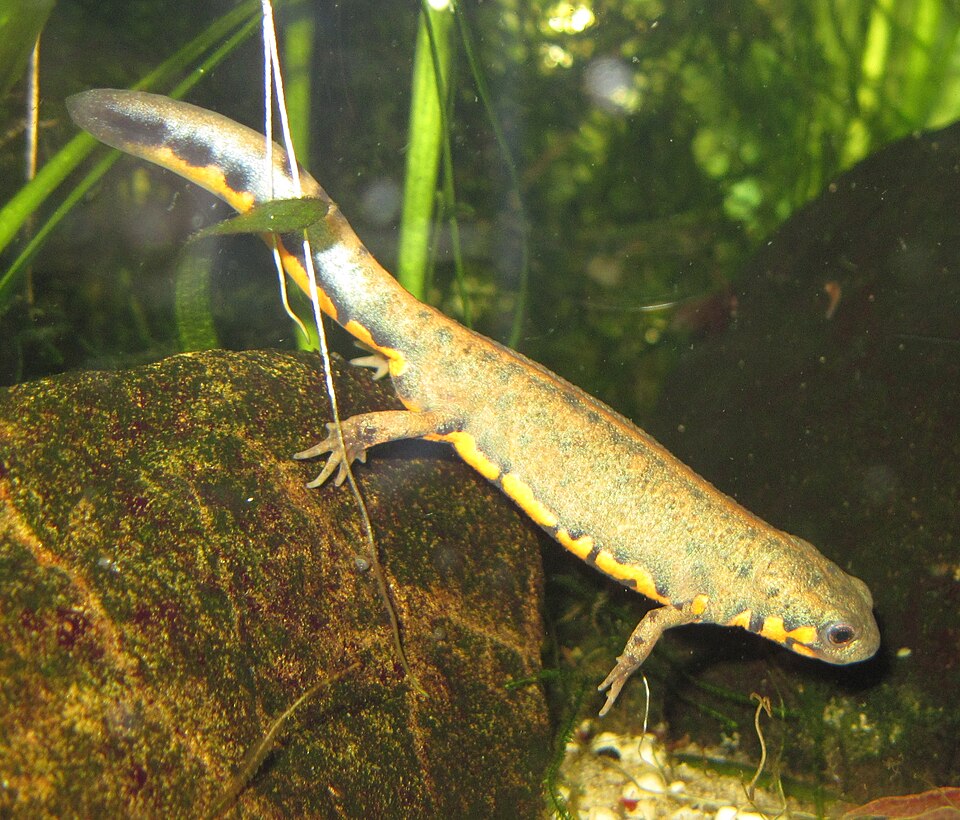
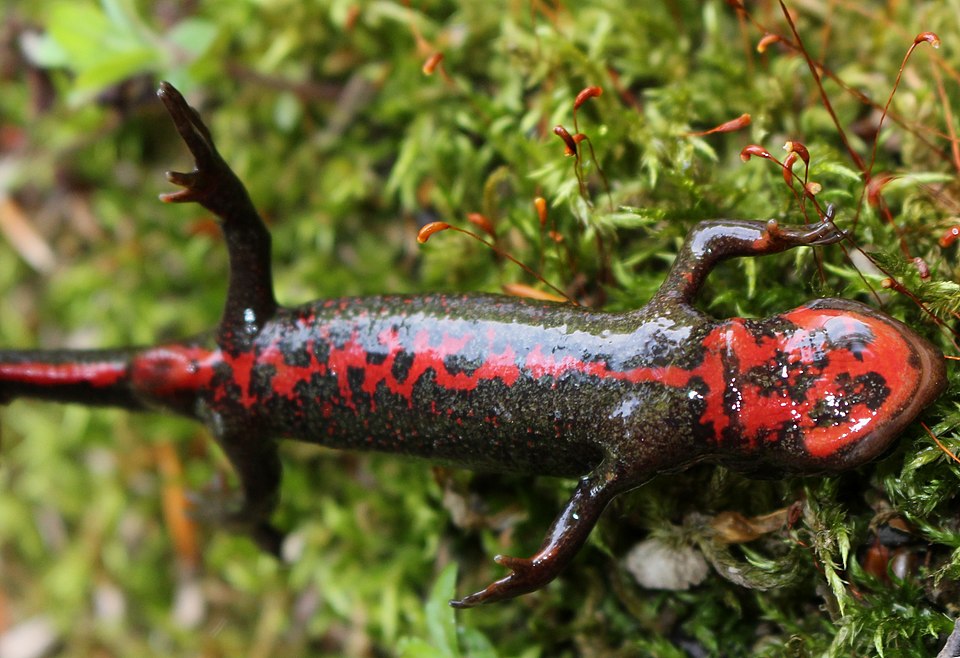
Fire belly newts are one of the most underrated pets in the amphibian hobby. They are small, quiet, and surprisingly active, making them endlessly entertaining to watch. Their striking appearance — dark, almost velvety black or brown on top with a vivid orange-red belly — is nature’s way of advertising that these little guys mean business. They are toxic, which makes them fascinating from a biological standpoint, and their semi-aquatic lifestyle gives keepers the unique experience of setting up a beautiful naturalistic enclosure that doubles as a living piece of art.
Unlike many reptiles, fire belly newts do not require UVB lighting or heating equipment, which significantly reduces both setup complexity and ongoing costs. They are also quite long-lived, with lifespans reaching 10 to 15 years in captivity under proper care, making them a meaningful long-term companion.
Handling and Temperament
Fire belly newts are not a hands-on pet in the traditional sense, and that is perfectly fine — they more than make up for it with their active and engaging personalities.
Toxicity — What You Need to Know
This is the most critical thing to understand before owning a fire belly newt. Both the Chinese and Japanese species produce tetrodotoxin (TTX) through their skin glands as a defense mechanism against predators. The Japanese fire belly newt is significantly more toxic and is considered one of the most poisonous amphibians in the world. The Chinese fire belly newt is less toxic but should still be treated with caution.
Importantly, the toxin primarily poses a risk if ingested — so as long as you are not handling them excessively and always wash your hands thoroughly after any contact, the risk to humans is minimal. Some individuals may experience mild skin irritation from handling, so wearing gloves is recommended. As a general rule with all amphibians, limit handling as much as possible since their skin is extremely sensitive to oils, salts, and chemicals on human hands.
Personality and Behavior
What fire belly newts lack in handleability, they make up for in sheer entertainment value. These guys are surprisingly active at all hours of the day, often seen crawling along the bottom, resting on driftwood, or swimming through plants. They are curious animals that will quickly learn to recognize their owner, especially at feeding time, and will often swim up toward the glass in anticipation of food. Watching a group of them interact, pile together, or clumsily tumble off a piece of driftwood is genuinely delightful.
They are best kept as an observational pet, and for the right type of owner, that is more than enough.
Care and Maintenance
Fire belly newts have specific but manageable care requirements. Setting things up correctly from the start will make the day-to-day maintenance very straightforward.
Enclosure Setup
Fire belly newts are semi-aquatic, meaning they need both a land area and a water area in their enclosure. The balance between land and water changes depending on the age of the newt:
- Juveniles (0–2 years): Spend the majority of their time on land. Provide more land area than water during this stage.
- Adults (2+ years): Become increasingly aquatic and will spend most of their time in the water. At this stage, increase the water area accordingly.
For tank size, a 10-gallon aquarium can comfortably house 2 to 3 individuals, but a 20-gallon tank is the recommended starting point for most keepers, especially if you plan on keeping a small group of 4 to 8 newts. A secure, escape-proof mesh lid is absolutely essential — fire belly newts are surprisingly capable climbers and will escape through any gap they can find.
Recommended substrates include aquatic soil, fine sand, or a bare-bottom setup. Avoid gravel, as pieces small enough to fit in their mouths can be swallowed and cause fatal impaction.
Aquatic Plants and Decor
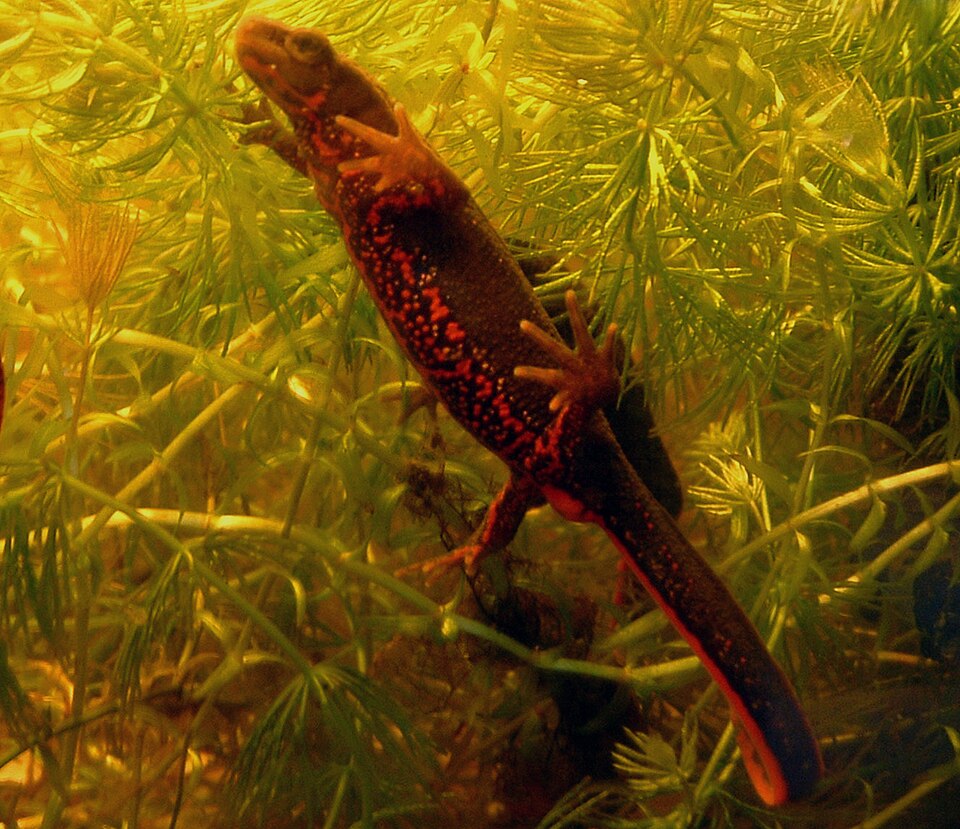
Live aquatic plants are highly recommended for fire belly newt enclosures. Plants such as Java moss, Anacharis, and dwarf hairgrass serve multiple purposes: they provide hiding spots that reduce stress, offer natural chemical filtration, and create a more naturalistic, enriching environment. Newts and salamanders love to hide, and giving them that option has a direct positive impact on their overall health and wellbeing.
Driftwood, cork bark, and smooth rocks are also excellent additions to give the newts surfaces to rest on and areas to explore.
Water Quality and Filtration
Clean water is non-negotiable for fire belly newts. Poor water quality can quickly lead to bacterial infections and serious illness. If using live aquatic plants, natural filtration may be sufficient, but partial water changes every 1 to 2 weeks are still strongly recommended regardless of filtration setup.
If using a filter, it is critically important to choose one that produces very low water current. In the wild, fire belly newts inhabit still or very slow-moving puddles and streams. Strong currents will stress them significantly. A sponge filter is the ideal choice — it provides biological filtration without generating excessive flow. Always keep a water testing kit on hand to monitor ammonia, nitrite, and nitrate levels.
Temperature
One of the greatest advantages of keeping fire belly newts is that they do not require a heater. They thrive at room temperature, specifically between 60–75°F (16–24°C). It is important to ensure temperatures do not exceed 75°F (24°C), as heat stress can become a serious problem. The Blue-Tailed Fire Belly Newt (Cynops cyanurus) is a slight exception, preferring temperatures between 70–76°F (21–24°C), making it a better choice for keepers in warmer households.
Lighting
Fire belly newts do not require UVB lighting or heat lamps. The only lighting consideration is for live aquatic plants, which benefit from a full-spectrum or plant-specific LED light. A proper day and night cycle should be maintained by turning lights off at night. This is simple, cost-effective, and stress-free for both you and your newts.
Health and Durability
Fire belly newts are generally hardy animals when their environment is properly maintained. The most common health issues arise from preventable causes.
Common Health Issues
- Bacterial Infections: Usually caused by poor water quality. Regular water changes and monitoring water parameters are the best prevention.
- Heat Stress: Temperatures consistently above 75°F can cause serious stress and illness. Keep the enclosure cool.
- Impaction: Can occur if the newt swallows inappropriate substrate like gravel or small stones. Always use safe substrate sizes.
- Skin Irritation: Can result from improper handling or exposure to chemicals. Always use damp, clean hands or gloves if handling is necessary.
Preventative Care
Maintaining stable water quality, keeping temperatures within the appropriate range, offering a varied and nutritious diet, and minimizing unnecessary handling are the four pillars of keeping a healthy fire belly newt. With proper care, these animals can live 10 to 15 years, making the initial investment of setting up their enclosure very much worth it.
Availability and Cost
Fire belly newts are moderately available in the pet trade, though they are not as commonly found as more mainstream reptiles.
Where to Buy
- Breeders: The best and most recommended option. Breeders can provide healthy, captive-bred animals with known histories.
- Reptile and Amphibian Expos: A great place to meet knowledgeable keepers and find healthy animals.
- Specialty Pet Stores: Some carry fire belly newts, though availability varies by location.
Cost
- Newt Price: Typically $10 to $30 per animal for common species.
- Setup Cost: A basic but proper setup including a 20-gallon tank, lid, substrate, plants, and decor will run approximately $80 to $150.
- Ongoing Costs: Relatively low. Food costs are minimal, and there are no heating or UVB lighting expenses.
Pros and Cons
Pros
- Highly active and entertaining to observe.
- No heating or UVB lighting required.
- Affordable to purchase and maintain.
- Long lifespan of 10 to 15 years.
- Beautiful, naturalistic enclosures are easy and rewarding to set up.
- Quickly recognize their owners and interact at feeding time.
Cons
- Toxic — not suitable for households with young children who may handle them unsupervised.
- Not a hands-on pet; handling should be kept to a minimum.
- Require consistent water quality monitoring.
- Escape artists — a secure lid is an absolute must.
- Less widely available than common reptile pets.
Final Thoughts
Fire belly newts are a genuinely underrated gem in the pet world. They are beautiful, fascinating, surprisingly interactive, and far easier to care for than many people expect. Setting up their enclosure is a fun and creative process, and once everything is established, day-to-day care is straightforward and enjoyable. While they are not the pet you pick up and cuddle, watching them go about their lives in a well-planted, naturalistic tank is a deeply satisfying experience that never gets old.
If you are considering a fire belly newt, we strongly recommend seeking out a reputable breeder or attending a local reptile and amphibian expo to see them in person. Their unique personalities and striking colors are sure to win you over immediately.
Have you owned a fire belly newt? We would love to hear about your experience! Drop your tips, stories, and questions in the comments below — the more we share, the better keepers we all become.
For more amphibian care guides and pet reviews, stay tuned to our blog and don’t forget to subscribe to our newsletter! 🦎


Leave a Reply